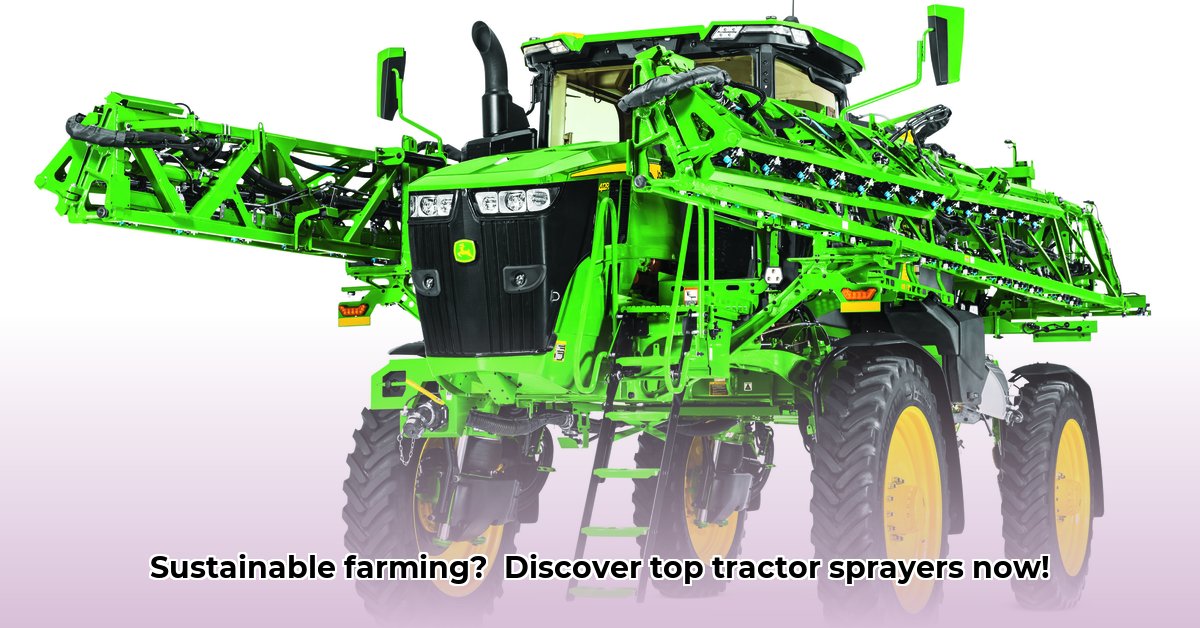
Choosing the right tractor sprayer is a critical decision for any farmer prioritizing efficiency and sustainability. This guide provides a structured approach to selecting a sprayer that meets your specific needs, considering factors such as tank size, pump type, boom width, and power source. We'll also compare key manufacturers and explore precision spraying technologies to optimize your operations. For more information on tractor attachments, check out this helpful resource: small tractor attachments.
Sizing Up Your Sprayer: Tank Capacity
Tank capacity is the first crucial consideration. Smaller farms might only need a 45-gallon (170-liter) tank for targeted treatments, while larger operations could require up to 1950 gallons (7360 liters) for extensive coverage. Larger tanks mean fewer refills, saving valuable time; however, they also reduce maneuverability. Consider storage space, your typical spraying frequency, and the ease of maneuverability with a full tank. The ideal size is a balance between efficiency and practicality. What level of farm-scale operations dictate the proper tank capacity for your acreage?
Pumping It Up: Centrifugal vs. Roller Pumps
The pump type significantly impacts performance. Centrifugal pumps are generally more affordable and suitable for lower-pressure applications, such as spraying liquid fertilizers. However, they may struggle with thicker mixtures. Roller pumps, while more expensive, excel with thicker materials like certain pesticides and herbicides, delivering the higher pressure often required for effective penetration. Consider the viscosity and pressure requirements of your commonly used materials – this will dictate your ideal pump type.
Boom Width: Coverage, Speed, and Drift
Boom width directly influences application speed and coverage area. Wider booms speed up the process for large fields; however, they also increase the risk of spray drift, particularly in windy conditions. Narrower booms provide more precise control and reduce drift but necessitate more passes. The optimal width is a trade-off between efficiency and precision, dictated by field size, layout, and crop type. What boom width best balances application speed and drift reduction for your specific farming practices?
Power Plays: PTO vs. Electric Sprayers
Tractor sprayers use either the tractor's power take-off (PTO) or an electric motor. PTO-driven sprayers are reliable and powerful, directly harnessing your tractor's engine power. Electric sprayers, though quieter and lower in emissions, often have lower pressure capabilities. A PTO system might be better for thicker materials or high-pressure needs, while electric sprayers are suitable for environmentally conscious operations where quieter operation is preferred. Do the environmental benefits of an electric system outweigh the potential limitations in pressure and power for your application needs?
Comparing Manufacturers: Ag Spray vs. FIMCO (A Preliminary Assessment)
A direct manufacturer comparison is difficult due to limited publicly available specifications. However, based on general knowledge:
| Feature | Ag Spray | FIMCO | Notes |
|---|---|---|---|
| Tank Sizes | Wide range; often includes larger capacities | Wide range; generally smaller tank sizes | Data based on typical models; check specifics |
| Pump Types | Offers both centrifugal and roller pumps | Offers both centrifugal and roller pumps | May vary depending on specific model options |
| Boom Widths | Varies depending on the specific model | Varies depending on the specific model | Consider field size & crop type |
| Power Source | Mostly PTO-driven; some electric models | Mostly PTO-driven; some electric models | Electric options may be available from both |
| Precision Tech | Available on selected higher-end models | Available on selected higher-end models | Check model specifications for availability |
Note: This is a general comparison. Detailed specifications vary significantly by model. Always refer to manufacturer documentation.
Smart Spraying: Precision Technologies for Sustainable Farming
Adopting precision agriculture technologies significantly boosts sustainability and efficiency. GPS guidance ensures even coverage, minimizing overlaps and chemical waste. Variable-rate technology allows for adjusting application rates depending on field conditions. These technologies reduce environmental impact and operating costs. "Are the upfront investment costs of precision spraying technologies justified by long-term savings and environmental benefits?"
Maintenance and Safety: Ongoing Responsibilities
Regular maintenance is crucial for efficient operation and longevity. This involves cleaning the tank and hoses, inspecting the pump, checking nozzles, and conducting seasonal maintenance. Proper chemical handling, storage, and disposal protects the environment and individual safety. How will you incorporate regular maintenance into your operational schedule to ensure the long-term efficacy of your sprayer?
Regulatory Compliance: A Legal Perspective
Compliance with local, state, and federal regulations regarding pesticide and fertilizer application is crucial. This includes calibration, safe application methods, record-keeping, and licensing requirements. Staying informed is paramount. What regulations must you adhere to regarding pesticide and fertilizer applications in your region?
The Final Word: Choosing the Best Sprayer for Your Farm
Selecting a tractor sprayer requires careful consideration of your individual farming needs, budget, and environmental goals. This guide provides a framework for making an informed decision. Researching specific models and consulting agricultural experts will further enhance your choice. Remember, the right sprayer is an investment in the long-term success and sustainability of your farm.